Explore our premium architectural window catalog engineered specifically to withstand excessive wind loads, seismic pressures, and extreme weather parameters.
As modern skyscrapers reach new heights, the architectural envelope experiences unprecedented physical stresses. Unlike standard residential window profiles, high-rise building windows must function under extreme environmental loads. As elevations surpass 20 or 30 stories, aerodynamic drag, microclimatic pressures, thermal fluctuations, and horizontal building sway compound exponentially.
For international real estate developers, facade engineers, and municipal general contractors, sourcing fenestration products is not simply a transactional procurement. It is a highly analytical selection process balancing occupant safety, energy conservation compliance, localized acoustics, and structural longevity. Achieving the correct balance of thermal transmittance (U-factor), solar control, and mechanical resistance dictates the overall life-cycle cost and commercial viability of the real estate asset.
Understanding the microclimate surrounding supertall structural envelopes is vital to avoiding glass failure, structural deformation, and catastrophic water ingress.
At ground level, wind velocities are significantly dampened by topography and urban features. In contrast, at heights of 100 meters or more, windows are subjected to laminar flow with design wind pressures exceeding 4.0 kPa. ORM Windows utilizes structurally glazed aluminum alloy extrusions (such as 6063-T6 or 6061-T6 profiles) engineered to guarantee deflection limitations under peak load criteria set forth by structural engineers worldwide.
Under heavy driving rains, water leakage represents the primary failure point for commercial curtain walls and high-rise windows. Sump chambers, structural thermal breaks, and integrated multi-point EPDM sealing gaskets form a pressurized rain-screen facade barrier. This design ensures that moisture is directed safely out via engineered weep holes, maintaining dry structural concrete slabs even during tropical typhoons.
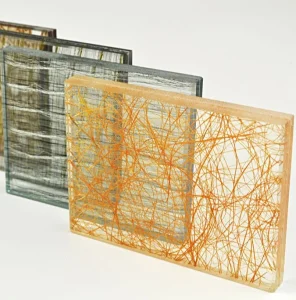
High-rise environments demand advanced laminated safety glass. Heat-strengthened outer panes prevent spontaneous breakage due to nickel sulfide (NiS) inclusions, while PVB (polyvinyl butyral) or SGP (SentryGlas Plus) inner structural layers ensure that even in the unlikely event of physical impact, the glass fragment system remains adhered to the frame to prevent external hazards.
Minimizing structural carbon footprint through custom-engineered thermal barrier systems.
Heat dissipation through aluminum frames represents up to 40% of building energy losses. ORM utilizes advanced polyamide thermal break strips inserted between interior and exterior aluminum profiles. This creates a mechanical thermal block that interrupts conduction. The result is a sharp reduction in heating and cooling energy usage, complying with strict ASHRAE and European green building initiatives.
Our triple-pane insulated glass units (IGUs) incorporate double silver Low-E coatings that selectively filter thermal infrared energy while allowing natural visible light. Filled with 90% pure Argon gas in the air spaces, these assemblies exhibit exceptionally low U-values (as low as 1.1 W/m²K), greatly decreasing radiant heat transfer into the building interior during hot summer months.
| Window System Code | Glazing Layout | U-Value (Metric) | SHGC Range | Acoustic Performance | Structural Rating |
|---|---|---|---|---|---|
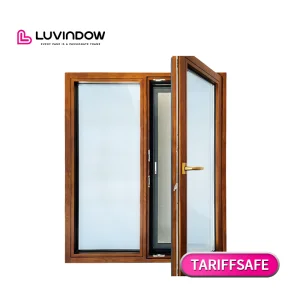
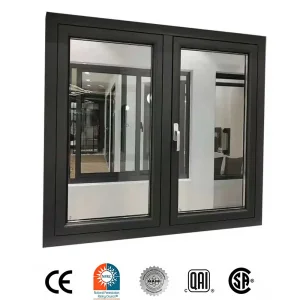
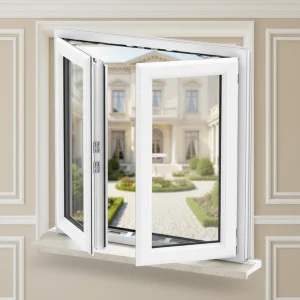
| Luvindow Casement | Triple Glass (4 Low-E + 12Ar + 4 + 12Ar + 4) | ~ 1.1 W/㎡·K | 0.25 - 0.35 | STC 42 dB | AW Class PG80 |
| RG65 Casement | Double Glass (6 Low-E + 12Ar + 6 Tempered) | ~ 1.6 W/㎡·K | 0.30 - 0.40 | STC 38 dB | AW Class PG70 |
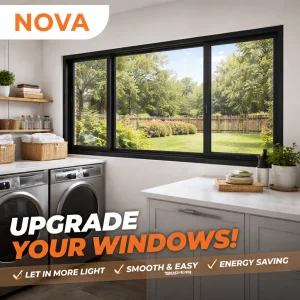
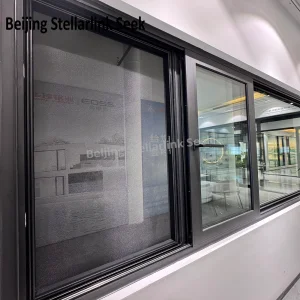
| NOVA Commercial Sliding | Double Laminated Glass (6 + 12Ar + 5+0.76PVB+5) | ~ 1.8 W/㎡·K | 0.28 - 0.38 | STC 44 dB | AW Class PG75 |
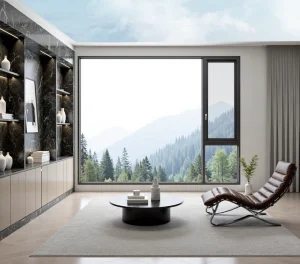
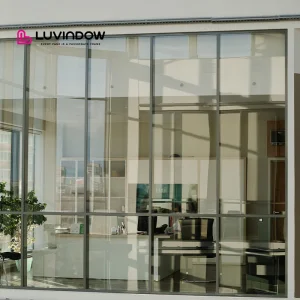
| Luvindow Storefront Wall | Triple Laminated (6 Low-E + 12Ar + 6 + 1.52SGP + 6) | ~ 1.2 W/㎡·K | 0.22 - 0.32 | STC 46 dB | AW Class PG100 |
How we ensure export profiles conform to regional building regulations, climatic loads, and verification requirements.
Our window lines designed for the North American commercial market undergo rigorous testing for air infiltration, water penetration resistance, and structural loads according to AAMA/WDMA/CSA 101/I.S.2/A440 standards. Furthermore, thermal properties are validated under NFRC guidelines to ensure verified U-factor, solar heat gain coefficient (SHGC), and visible transmittance (VT) values.
To withstand the intense UV radiation and extreme wind conditions of Oceania, our structural sliding and casement profiles undergo physical deflection tests, air leakage assessments, and water tightness trials. Fully compliant with AS2047 and AS1288 requirements, ORM products are built to endure harsh weather systems along coastal developments.
ORM windows comply with harmonized EN standards, ensuring safety, mechanical strength, and sound attenuation under CE marking guidelines. With high thermal insulating frames and triple pane configurations, these windows satisfy demanding European building energy codes and Passivhaus structural principles.
Combining structural expertise with the cost efficiencies, advanced materials, and robust logistics of China's premier aluminum production hub.
Foshan ORM Windows Co., Ltd. is a professional aluminum window manufacturer located in Foshan, Guangdong, China, one of the country's leading centers for architectural aluminum production and building materials manufacturing. Established in 2011, the company specializes in the design, engineering, manufacturing, and export of high-performance aluminum window systems for residential, commercial, and architectural projects worldwide.
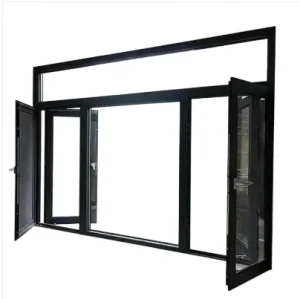
With a modern manufacturing facility covering more than 20,000 square meters and a team of over 280 skilled employees, ORM Windows is dedicated to providing reliable, energy-efficient, and aesthetically appealing window solutions. The company's product portfolio includes aluminum casement windows, sliding windows, awning windows, fixed windows, tilt-and-turn windows, thermal break window systems, double-glazed windows, and customized architectural window solutions designed to meet diverse building requirements.
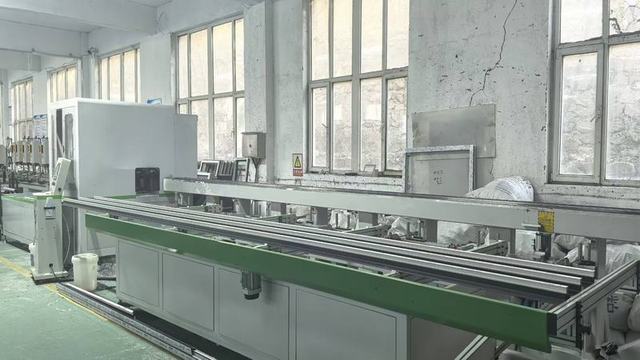
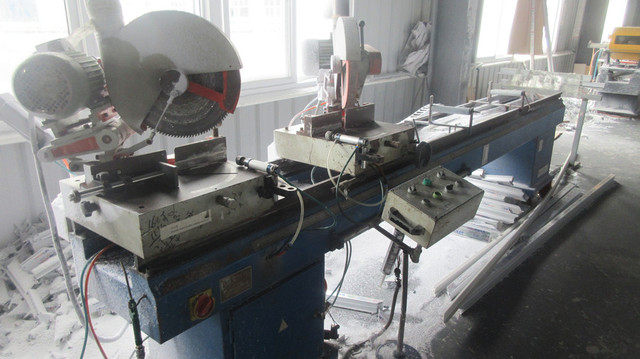
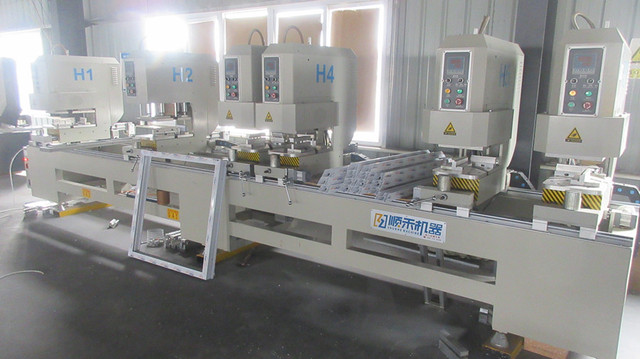
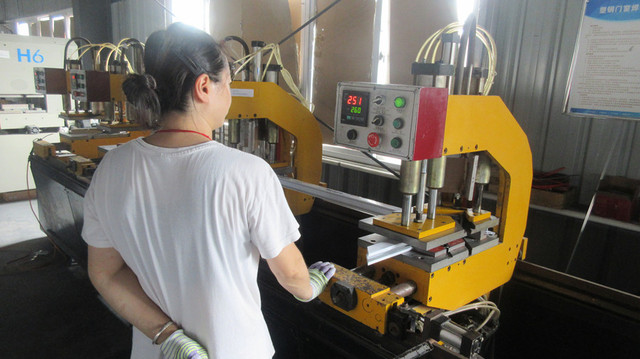
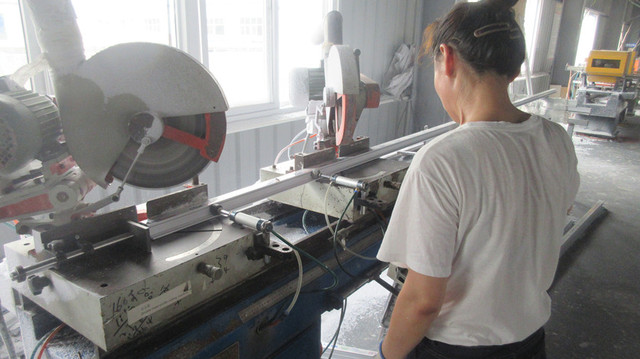
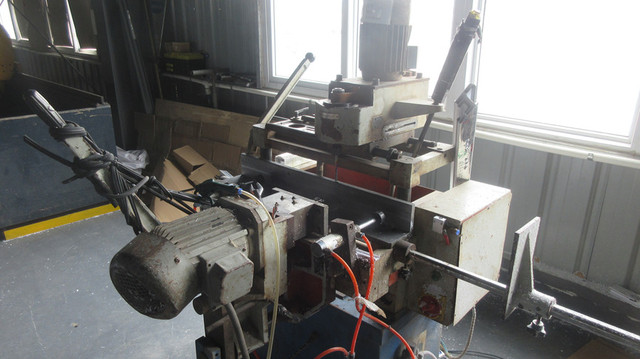
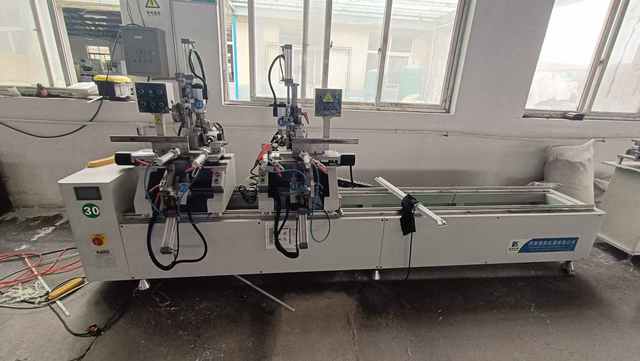
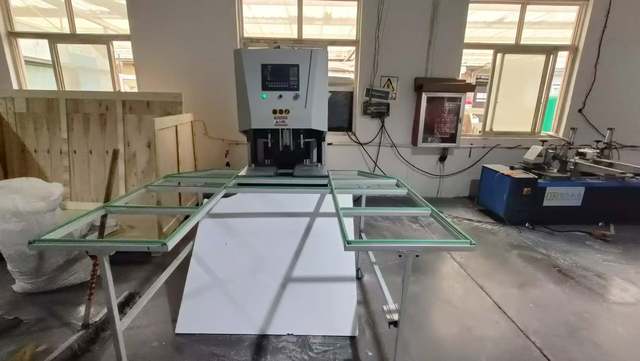
ORM Windows integrates advanced production equipment, precision fabrication technology, and strict quality management procedures throughout every stage of manufacturing. From aluminum profile processing and glass assembly to hardware installation and final inspection, every product is produced to ensure durability, weather resistance, thermal performance, and long-term reliability.
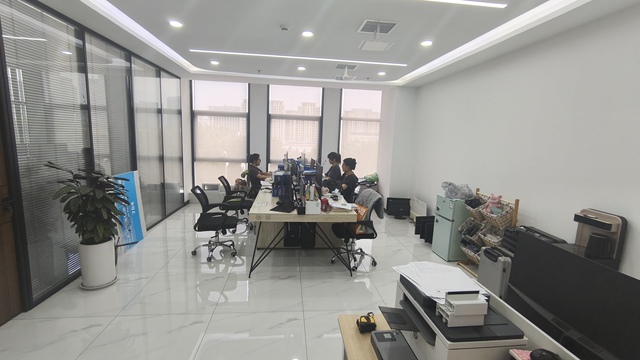
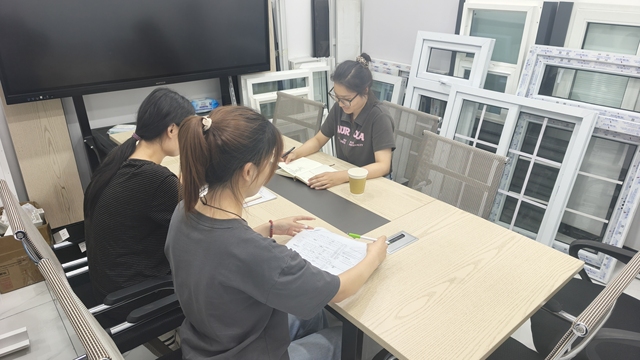
Supported by an experienced engineering and product development team, the company offers comprehensive OEM and ODM services, including customized dimensions, frame finishes, glazing options, hardware configurations, and private-label manufacturing. These flexible solutions enable builders, developers, distributors, and project contractors to meet specific market and project demands.
Serving customers across North America, Europe, the Middle East, Southeast Asia, Australia, and other international markets, Foshan ORM Windows Co., Ltd. has established a reputation for quality manufacturing, professional service, and dependable delivery. The company remains committed to providing innovative aluminum window solutions that enhance modern architecture while supporting sustainable and energy-efficient building development worldwide.
By locating production in Foshan, ORM benefits from immediate access to premium raw aluminum smelters, advanced surface coating facilities (including vertical powder coating and high-durability fluorocarbon spraying), and specialized hardware component providers.
This geographic clustering reduces lead times, optimizes product engineering, and guarantees competitive pricing relative to domestic European or North American producers, with direct proximity to Guangzhou and Shenzhen ports ensuring rapid container shipping logistics.
Different regions demand unique configurations. Here is how ORM adapts to diverse architectural environments.
Climatic Challenge: Sustained high winds and wind-borne debris.
ORM Engineered Solution: Integrated SentryGlas Plus (SGP) laminated safety glass systems in heavy-gauge 6061-T6 structural frames, rated for extreme impact pressures and corrosion-resistant hardware coatings.
Climatic Challenge: Thermal bridging, frost buildup, and high heating demands.
ORM Engineered Solution: 24mm multi-chambered polyamide thermal breaks, argon-filled triple-glazed units, and dual low-emissivity (Low-E) coatings designed to maximize passive solar heat gain while retaining interior warmth.
Climatic Challenge: Extreme ambient decibel levels and low-frequency traffic noise.
ORM Engineered Solution: Acoustic-rated asymmetric glazing layers combined with tight compression EPDM double-seals, achieving certified sound reduction indexes up to 46 dB.
Addressing the fundamental queries of engineers, developers, and procurement officers regarding high-rise fenestration projects.
High-rise windows must satisfy rigorous structural specifications, primarily determined by wind loads at height. Residential systems typically handle wind pressures up to 1.5 kPa, whereas high-rise windows are designed for pressures exceeding 4.0 kPa. They require wider structural profile depths, thicker aluminum alloy profiles (minimum 1.8mm up to 3.0mm thickness), and advanced structural glazing tapes or wet-glazed silicones to resist wind suction and structural movement.
We verify performance through independent testing laboratories, conforming to US standards (AAMA/WDMA/CSA 101/I.S.2/A440 and NFRC certifications), European standards (EN 14351-1, CE mark), and Australian certifications (AS2047/AS1288). Our in-house testing facilities regularly conduct air-water-structural tests to confirm load performance and structural limits before shipping.
Generally, a custom high-rise commercial window project takes 35 to 50 days from engineering drawing approval to manufacturing completion. The timeline includes aluminum extrusion extrusion, custom profile surface treating (powder coat/anodize), structural glazing curing times, and rigorous multi-stage QA inspections. Shipping durations vary by port, typically requiring 15–20 days to Australia and 25–35 days to North America and Europe.
Our engineering team provides comprehensive design-assist support. We work alongside developer engineering teams, reviewing architectural designs to optimize wind loads, structural layouts, and drainage paths. We supply shop drawings, thermal and structural structural simulations, and physical product mockups to ensure ease of installation and architectural compatibility.
We package high-rise windows using robust protective materials. Profiles are wrapped in protective film, cushioned with dense foam corners, and secured inside custom-built heat-treated plywood crates. Silica gel desiccant packs are inserted to control moisture. Crate stacks are designed for direct container loading and unloading, minimizing forklift handling damage risks.
Select specialized options configured for high-floor residential, commercial projects, and energy-efficient building envelopes.
 ORM Windows