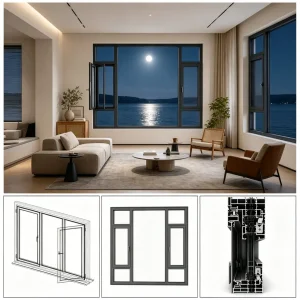
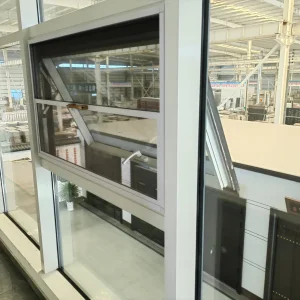
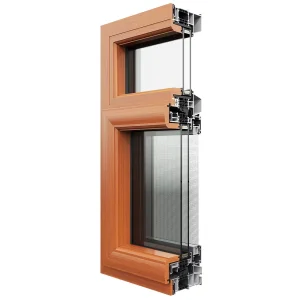
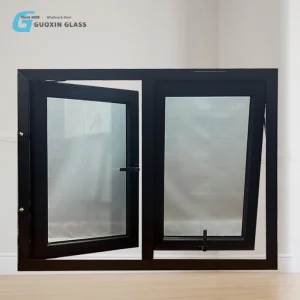
Explore our elite selection of custom cold-formed, thermal break, and structural aluminum window systems engineered for architectural distinction.
Foshan ORM Windows Co., Ltd. is a professional aluminum window manufacturer located in Foshan, Guangdong, China, one of the country's leading centers for architectural aluminum production and building materials manufacturing. Established in 2011, the company specializes in the design, engineering, manufacturing, and export of high-performance aluminum window systems for residential, commercial, and architectural projects worldwide.
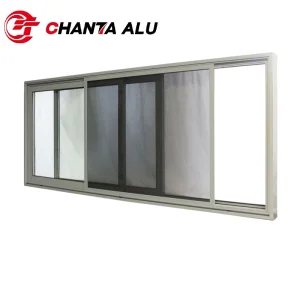
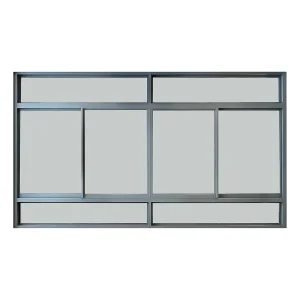
With a modern manufacturing facility covering more than 20,000 square meters and a team of over 280 skilled employees, ORM Windows is dedicated to providing reliable, energy-efficient, and aesthetically appealing window solutions. The company's product portfolio includes aluminum casement windows, sliding windows, awning windows, fixed windows, tilt-and-turn windows, thermal break window systems, double-glazed windows, and customized architectural window solutions designed to meet diverse building requirements.
ORM Windows integrates advanced production equipment, precision fabrication technology, and strict quality management procedures throughout every stage of manufacturing. From aluminum profile processing and glass assembly to hardware installation and final inspection, every product is produced to ensure durability, weather resistance, thermal performance, and long-term reliability.
How the Foshan industrial cluster and advanced digital systems optimize lead times, lower raw material overhead, and guarantee structural integrity.
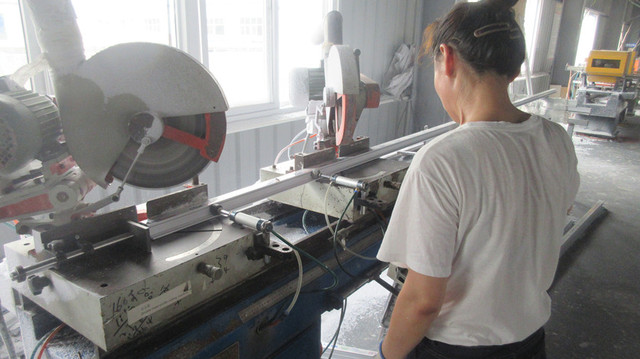
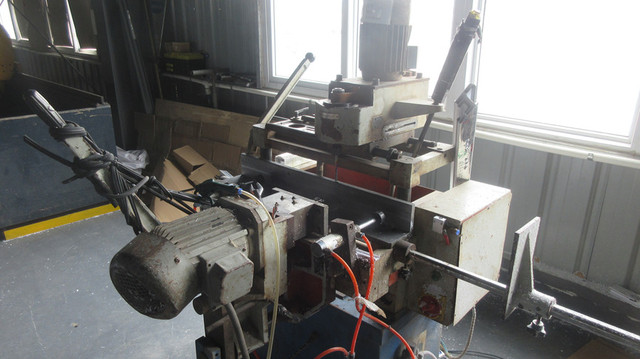
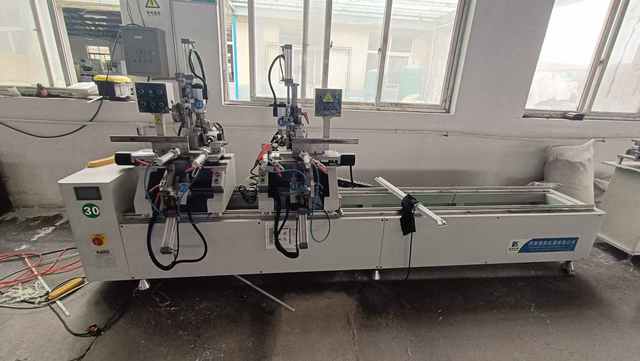
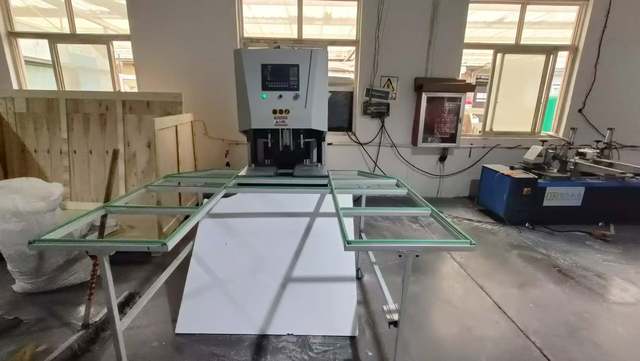
By leveraging high-end multi-axis CNC machines and automated milling centers, we process extruded aluminum profiles down to sub-millimeter tolerances (less than 0.1mm deviation), ensuring perfect miter joints and superior airtightness.
Foshan is the Silicon Valley of aluminum extrusion. Our immediate access to premier smelting mills, custom dies, structural glass tempering lines, and hardware manufacturers dramatically minimizes component transport time and cost.
Our quality control protocol checks every stage of the manufacturing cycle: raw aluminum alloy spectroscopic testing, anodizing/powder-coating thickness checks, gasket fit, glass seal integrity, and operational stress-testing of hardware.
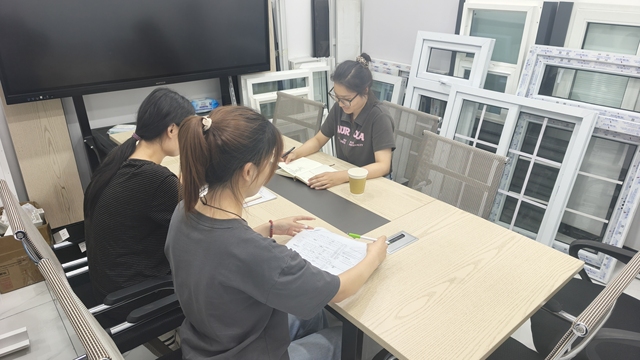
Supported by an experienced engineering and product development team, Foshan ORM Windows Co., Ltd. offers comprehensive OEM and ODM services. This includes customized dimensions, frame finishes, glazing configurations (e.g., argon gas fills, decorative grids), customized hardware sets, and private-label packaging. This operational flexibility allows global builders, developers, distributors, and general contractors to fulfill strict project criteria without compromising lead times or structural guarantees.
A deep dive into emerging technologies, carbon-neutral materials, and thermal performance systems in architectural glazing.
Traditional non-thermal windows suffer from high heat conductivity, leading to high utility costs and indoor condensation. The future lies in high-performance polyamide (such as PA66GF25 - polyamide reinforced with 25% glass fiber) thermal barriers. By separating the interior and exterior aluminum profiles, these thermal breaks drastically lower U-factors. Modern R&D is now focusing on multi-cavity thermal break designs filled with insulating foams to achieve U-values compliant with Passive House requirements (< 0.8 W/m²K).
Building Integrated Photovoltaics (BIPV) is transforming architectural windows from energy drains to energy sources. In parallel, electrochromic and thermochromic smart glass allow structures to dynamically adjust visual transmittance and solar heat gain coefficients (SHGC) based on real-time solar intensity and outdoor temperature, drastically reducing mechanical HVAC loads in glass-heavy commercial facades.
Aluminum is infinitely recyclable without losing its inherent mechanical properties. Manufacturers are increasingly prioritizing "green aluminum" smelted via clean energy sources (like hydro-power) and integrating a higher percentage of post-consumer recycled metal. This reduces the embodied carbon index of architectural components, securing crucial LEED, BREEAM, and DGNB credits for eco-conscious real estate developments.
| Profile Type | Average U-Value (W/m²K) | Structural Load Rating | Acoustic Damping (STC) | Primary Application |
|---|---|---|---|---|
| Non-Thermal Aluminum | 5.0 - 6.2 | High (Up to 5.0 kPa) | 28 - 32 dB | Industrial Sheds, Internal Partitions, Warm Zones |
| Standard Thermal Break (24mm Barrier) | 1.8 - 2.4 | High (Up to 6.5 kPa) | 35 - 40 dB | Standard Residential & Light Commercial Projects |
| Multi-Cavity Insulated Thermal Break | 0.8 - 1.4 | Extra High (Up to 8.0 kPa) | 42 - 48 dB | Passive Houses, High-end Residences, Cold Climates |
| Wood-Clad Aluminum Hybrid | 1.0 - 1.6 | Medium to High | 38 - 44 dB | Premium Architectural Villas, Luxury Condos |
Tailoring system designs to meet unique architectural forms, wind loads, and thermal demands across global territories.
For high-density urban towers, windows must withstand severe wind loads and negative pressures. Our engineering team designs custom structural profiles with thick-walled profiles (up to 3.0mm structural depth) to pass strict deflection criteria, integrating pressure-equalized rainscreen principles for advanced water management.
Urban residences near expressways or airports demand superior noise reduction. We combine double/triple thermal break frames with acoustic laminated glass (featuring specialized PVB interlayer films) to yield Sound Transmission Class (STC) ratings exceeding 45 dB, restoring indoor tranquility.
Saline environments quickly corrode unprotected metals. We apply architectural-grade powder coatings (certified by Qualicoat Seaside) and anodized finishes (up to 25 microns thick) paired with multi-locking point hardware to prevent wind-driven rain penetration and structural hardware failures.
Ensuring frictionless importing, local code compliance, and structural certification for global jurisdictions.
To comfortably clear customs and comply with localized building codes, architectural products must hold official third-party certifications. ORM Windows designs systems targeted to meet several international standards:
Manufacturing quality represents only half the challenge; preserving item integrity during transport is equally crucial. We build customized steel crates and heavy-duty multi-layer wood boxes lined with protective foam corner guards to prevent shifting and friction during maritime freight.
Furthermore, we provide detailed 3D CAD installation drawings, profile cross-sections, flashing layouts, and structural anchoring instructions to local site contractors, minimizing errors and speeding up onsite assembly.
Crucial metrics for supply chain officers, commercial developers, and project managers when selecting an offshore manufacturing partner.
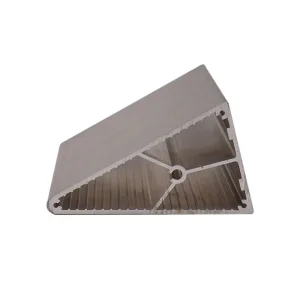
Confirm the factory's capacity to build custom extrusion dies. B2B projects often demand specific, non-standard window profiles. Top-tier factories can design, test, and manufacture custom dies within 15–20 days, providing 3D printed prototypes first for verification.
Hardware represents the primary point of physical wear in window assemblies. Ensure your supplier works with top-tier international brands (such as Roto, Siegenia, Sobinco) or reputable domestic brands with cycling test certificates exceeding 25,000 open-and-close cycles.
Large commercial projects require high quantities delivered in phases. A manufacturer with over 20,000 sqm of manufacturing area and 250+ employees guarantees sufficient machinery and labor bandwidth, protecting project timelines from delays.
Addressing primary structural, chemical, thermal, and logistics queries for international architectural glazing buyers.
A: 6063-T5 is the gold standard for architectural extrusions. The "T5" tempering process provides excellent tensile strength, high corrosion resistance, and a highly smooth surface finish ideal for anodizing or powder coating, maintaining structural integrity under high wind loads.
A: Yes. By integrating polyamide thermal breaks (PA66GF25) and choosing double or triple low-E glass options filled with argon gas, we can lower the U-factor to meet or exceed strict regional energy requirements, including California's Title 24 and the European EnEV standards.
A: We utilize heavy-duty export packaging, including protective film on profiles, protective corner pads, and customized steel-pallet crates. We also place desiccants in the crates to prevent moisture buildup and surface oxidation during long sea voyages.
A: Absolutely. Supported by our experienced engineering and product design team, we provide full CAD and BIM drawings, custom frame profile design, customized hardware branding, and tailored glass specifications to align with your project's unique requirements.
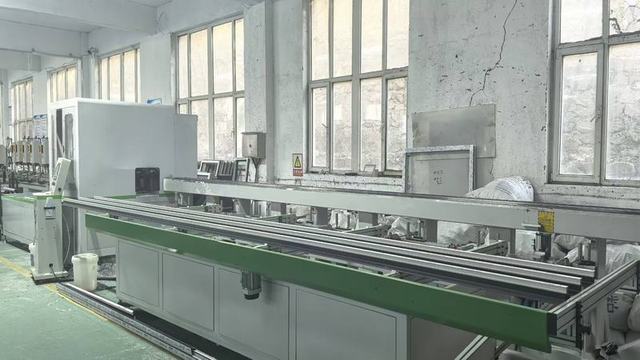
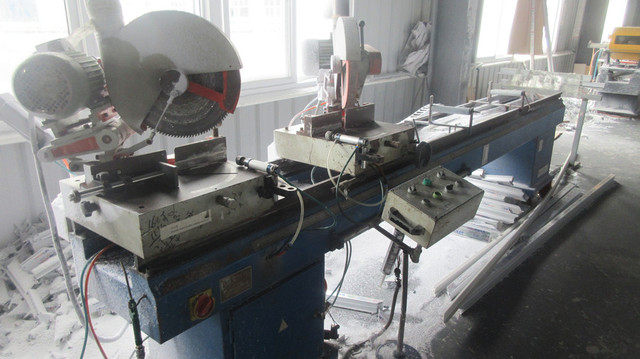
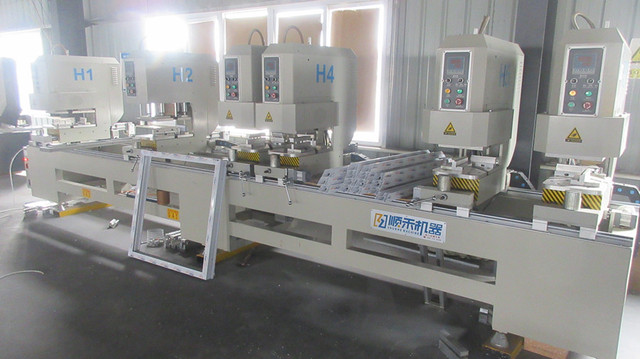
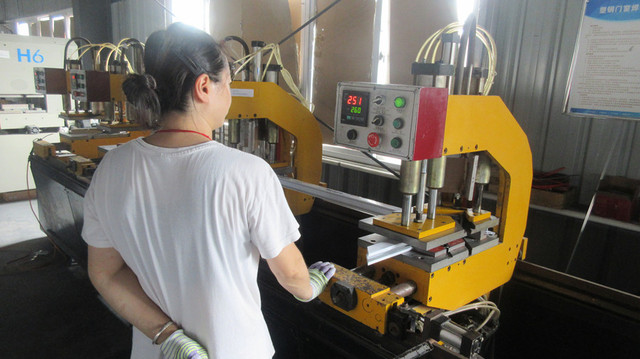
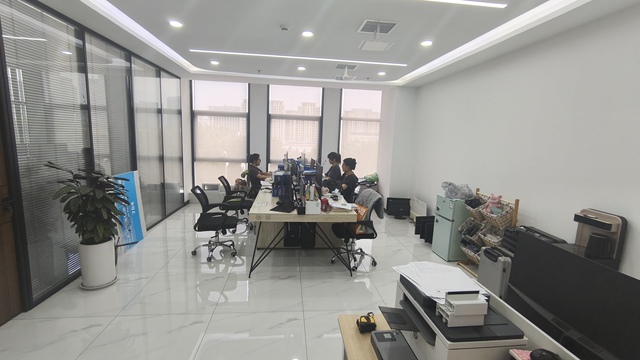
Take a virtual tour of our 20,000 square meter factory in Foshan, Guangdong, China. Real, uncompressed glimpses into our everyday production standards.
Complete your structural envelope with thermal break solutions, soundproof double-glazed systems, and custom profile configurations.
 ORM Windows